Research and development

How we build Squirl.

We started by asking Deaf signers what gets in the way of everyday conversations. Everything since has come from their answers.

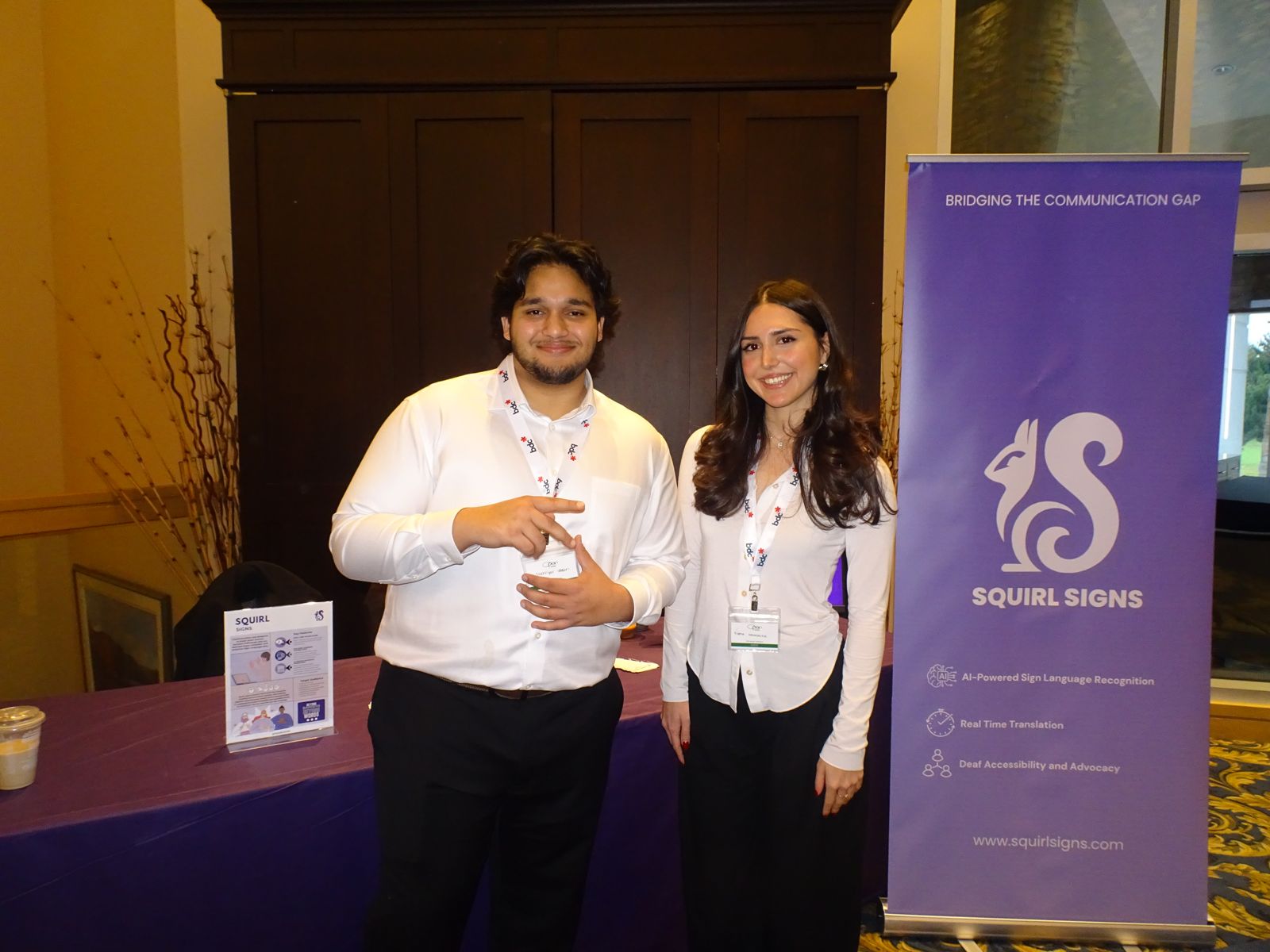
Shehriyar Nasri and Fiona Hanasavha at the Squirl Signs booth, beside a banner reading Bridging the communication gap
At the Squirl Signs booth.

Product research

Listening before building.

Before writing any code, we spoke with Deaf community members, advocates, interpreters and researchers, including people at Silent Voice Canada and the University of Toronto. They wanted something quick to open, that works on the device they already have, and that respects how ASL works.

Research methodology

Movement, not video.

A tracking model finds points on the hands, face and body in each frame, and our recognition model reads how those points move. That keeps the focus on the signing rather than the background, and lets us improve the model without storing anyone's video.

How it works

A loop that keeps getting better.

  1. Listen

    Deaf signers, interpreters, educators and advocates shape what we build next.

  2. Collect

    Signers can choose to share examples of their signing. Nothing is kept without a clear yes.

  3. Train

    We train on thousands of clips from many signers, then test on signers the model has never seen.

  4. Refine

    Every thumbs up or down in the app shows us where the model needs work.

Want to help shape Squirl?

If you sign, teach, interpret or work with the Deaf community, we'd love to learn from you.